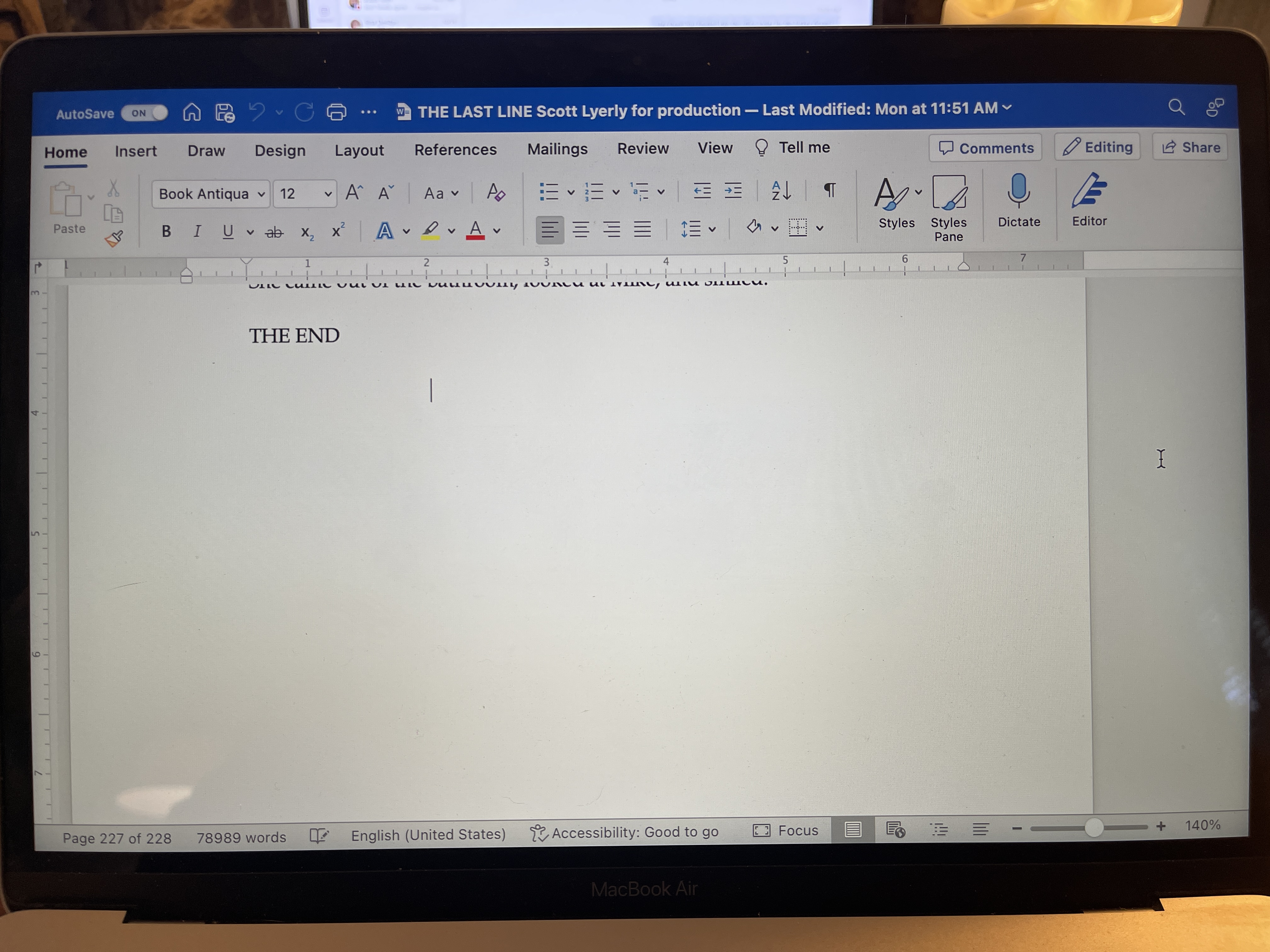
I finished the next big hurdle toward getting my book out next year, which involved working with my editor to complete revisions and turn it into the production team. This was a huge relief, not least of which because the final manuscript for production was running late. That’s not anyone’s fault, things happen and life gets in the way sometimes. But I didn’t realize how stressed I was about getting it turned in until the final document was fired off to the production team Monday morning. Suddenly I felt light as a feather.
The revision process was a scramble. My editor, Sara, and I found ourself up against a crunch this past weekend. (She is a great editor, by the way—every writer should be so lucky.) We were trading pieces of the manuscript back and forth via email at all hours as we worked the changes. I’m not sure I’d want to work this way all the time, but in this case, the stress of the deadline helped make the manuscript better.
No, really.
Having to turn revisions around so quickly didn’t give me the opportunity to sit back, ponder, and write long-winded passages. The corrections were succinct and to the point. And better than what I had written in the first place.
The takeaway for me was an eye-opening realization: I write too much. Not from a time standpoint, but from a words standpoint. Especially in my subsequent versions. I’m what Stephen King described as a “putter-inner.” And here’s the thing: I’ve always known I add too much text, and I always think I’m doing a good job cutting what’s unnecessary. But after this exercises I realized I am not cutting deep enough. Kill your darling, as the saying goes.
I gained a better perspective on what really needs to be in a sentence. And a lot of it boils down to trust. As I writer, you’ve got to trust the reader. I can write, “I don’t wanna!” she said vociferously, but I don’t need to. The word “wanna” and the exclamation point already tell the reader that the character is speaking vociferously. Or vehemently. Or pleadingly. Or whatever. All I have to do it write “she said” and trust the reader to take away what I intended.
(Note: I don’t think I have ever used “vociferously” in a sentence before. And I don’t plan to. This is just an example.)
I’ve never been good at this kind of trimming, and with this edit Sara really taught me how to cut and cut smartly. And for that, I will be eternally thankful.
All of which is a long-winded way of saying, the manuscript is to the production team and the next phase is copy editing. Onward and upward!



 Scott Lyerly