Skip to content

SCOTT LYERLY

  • Home
  • About
    • Contact
    • Bio
    • My Tourette Syndrome Story
  • Books
    • The Last Line
    • Anthologies
  • Other Writing
    • Short Fiction & Essays
    • Blog
  • Upcoming Events
  • Etcetera
    • Newsletter Sign-up
    • Privacy Policy
  • Facebook
  • Instagram
  • Threads
  • TikTok
  • Bluesky
  • My Five Favorite Books on Writing

    May 6th, 2026

    (I originally wrote about this on Substack in June 2025.)

    Every so often, I deep-dive in the world of books on writing. I cannot lie, I love a book on craft. It’s fascinating to see how each author approaches the work. From those who espouse beat-by-beat plotting (such as Save the Cat Writes a Novel) to those who go out of their way to exclude plot as one of the core elements of a novel (such Stephen King does in On Writing), every practitioner has a unique approach.

    In going back over some old favorites and reading through some new ones, I wanted to give you a list of my top five books on the craft (or craft-adjacent). I love a good book on the craft of writing. Once King released his, On Writing: A Memoir of the Craft, it felt like all the others could be retired. His writing is so conversational it feels like you’re sitting on the porch, rocking in a couple of chairs, jawing about writing.

    But, of course, his is not the only book on the craft of writing. So, in the spirit of pulling back the curtain for a peek behind the scenes, here are my five favorites:

    • On Writing, by Stephen King – Probably not a surprise given I mentioned it above. It might be the single best-selling book on writing since Strunk and White. And I’d argue Strunk and White only surpasses it because they are required in so many college writing classrooms. King has always had an easy-going style, and his non-fiction is sometimes better than his fiction. It boils down to storytelling, and the first third of his book is him telling the story of his life (to date), which in the original was around the year 2000, and how it made him a writer. It’s marvelous storytelling and a marvelous insight into what made this juggernaut of a pop culture writer so big. The back third of the book is more of the how-to. If you’re looking for the manual of how to write, how to plot and build that three act structure, building character backgrounds, dissect a scene, that kind of deep-in-the-weeds work, then this really isn’t it. This is about the approach, the discipline required, the tools you need to write, and some rules to follow (e.g. cut as many adverbs as possible, etc.). It’s extremely valuable and I’ve read it multiple times.
    • The Art of Fiction, by John Gardner – Gardner was a writer of literature and a professor of writing at university. And while I hesitate to call attention to the word “literature”, it cannot be denied that there is a definite hierarchical perception of fiction writing, both from within the writing community and without. I’m not passing judgement, mind you. I know where I fall as a writing of whodunnits and werewolf novels. I only point it out because Gardner might be seen as someone whose advice of writing may not translate well for anyone not engaged in the pursuit of “literature.” And you’d be wrong. While most of Gardner’s examples do come from quote-unquote literature (you’ll never find a reference to V.C. Andrews), the advice and insight into what makes fiction work and how to approach it is exemplary. This is easily one of he best book on writing I have ever read.
    • The Elements of Style, by Strunk and White – I’m not sure I even need to explain this one. Unless you’ve been living under a rock for your entire writing career, you’ve heard of this one, probably at least cracked it open to skim it, and might even already own a copy. (If you don’t already own a copy, go buy one. Now.) It contains two parts. The first is by Strunk, designed for his college students as a way to get them to write better papers. It’s all mechanics presented in the straight, no-nonsense manner. The second part is by White (that is, E.B. White of Charlotte’s Web fame). Asked by the publisher to add some notes on style, he did so with a small set of rules that should be taken as gospel. Together, this is an indispensable book, and at bare 100 pages, and slim little volume.
    • How Fiction Works, by James Wood – I have never read a book that was not intended as a writing book that taught me so much about writing. Wood takes fiction and completely takes it apart to show how it works. Not at a “and here is the three-act structure, and here is where the denouement happens,” etcetera, but at an even deeper level. For example, when talking about the passage of time in a book, using an example of the main character walking down the street, they may observe various people doing various things (sweeping, cleaning, getting their mail, whatever), which is conveyed through the prose. But each one of these side actions is almost a snapshot and none, obviously, is described simultaneously (it’s a list of actions, after all) and yet we perceive it all as part of a singular moment in time because it’s contained in a single sentence. Even if it happens as the character progresses down the street, we still view it as a whole because of its containment to a single sentence or phrase. Furthermore, what exists outside of the world of these actions? Anything? Can we prove that? After all, the eye, the POV, the “camera” never strays past those actions. Once swept, does the woman go back in the house, and if so where does she put the broom and dustpan? We’ll never know because our involvement in her world stops that moment our character walks past her while she’s sweeping. This is the kind of deep dive Wood offers, and while it’s not a how-to for writers, any writer anywhere would benefit from this dissection.
    • The Reader’s Manifesto, by B.R. Myers – This will be the controversial choice, but I find a lot of value in it. This book started out as a self-published volume called The Gorgons in the Pool. Myers sent copies out to major outlets, hoping one might be interested, suspecting none would, when The Atlantic reached out to him. They wanted to publish it but they needed to trim it down. Myers agreed and subsequently lit the hair of the literati on fire. The backlash was strong, even as some critics begrudgingly agreed he had made some good points. The book was reissued by a small publisher, and it’s worth a read. If for no other reason than to keep yourself grounded. Like the ventriloquist you might start writing in another person’s style. But even if that style is immutable, there is always the danger that what you are writing becomes pastiche. Understanding critically where the pitfalls of that style are can help you avoid them. And whether you agree with Myers assessment or not, it never hurts to have an understanding of what the dissenting voices are saying.

    These are the five I would suggest. There are plenty of other books on writing, you can pick them up if you really want to, but these are the ones I think give you the best feel for why we do what we do, and what works and what doesn’t. Again, these aren’t going to tell you all of the individual elements that you need to assemble a novel. This just grounds you as to what fictions is, who it works, and how not to make yours suck too badly.

    As for reading order, just follow the order I’ve listed them in above. King is a nice, easy-going introduction, Gardner is a more serious study, take a break from the serious study with the read-in-an-hour Strunk and White, which will clear your mind for the deep dive of Wood, after which you can resurface and enjoy some Myers’s Emperor-has-no-clothes assessments of major writing icons.

  • Nibbling Around the Edge of Mortality

    April 29th, 2026

    I’ve been reading some of the literature of grief. We’ve had a pair of deaths in the family, not quite back-to-back but close together nevertheless. A few months apart. One expected, one very much a surprise. In the ensuing days and weeks that followed, as plans were rearranged or outright canceled; as the reality of the enormity of the task before us to shut down an entire apartment; as the phone chirped with innumerable tender texts of consolation; and the endless phone calls to friends, family, lawyers, banks, and funeral homes—somewhere in this mess I pulled a book off the shelf and opened to page one. The greatest recent book on grief is easily The Year of Magical Thinking, Joan Didion’s account of how the year after the death of her husband, John Gregory Dunne, unfolded and how many of the things she did in that year were all a way to bring John back, even though she knew he was gone forever. This had been languishing on my bookshelf for over twenty years, the front flap of the dust jacket serving as a bookmark for a spot I found particularly interesting. And as I reread the book, it struck me in ways it hadn’t my first meander through.

    Why would it? There was no reason it should. It wasn’t that I was unaware of the emotion of grief. Sure, over the course years, we’d lost loved ones, friends, grandmothers. But we’d not faced death like this before. Not parents. This was new, and immediate, and I turned to the book to re-familiarize myself with the grieving process.

    Over the weekend, despite having not finished The Year of Magical Thinking, I decided I needed additional books on the topic of grief. The literature of mourning is a peculiar one, with the reader avidly consuming the sadness of the authors. Yet, there it is. I had two books in particular in mind: C.S. Lewis’s classic A Grief Observed, taken from the journal he kept after the passing of his wife, Joy; and H is for Hawk, Helen Macdonald’s work on the passing of her father and how a goshawk helped her through her grief.

    So, to the bookstore I went. And found both, neither of which I have yet to start. I haven’t even finished Didion’s book yet, and it’s not long. But I was sidetracked. (I’m easily sidetracked when it comes to books.) As I was passing the Essays section, a book with a lapis blue cover caught my eye. What kept it there was the author’s name, in black lettering on the spine: Ursula K. Le Guin. The book was No Time to Spare and it is a collection of her blog posts from when she decided to start blogging—in her eighties.

    By her own admission, Le Guin never had much use for the form. In fact, based on her belief of where the term “blog” came from, she’d had little use for them. (For the curious-minded, she thought it was short for something like bio-log. It’s actually a shortened version of the term weblog.) But she discovered Jose Saramago’s work as The Notebooks, which were his own posts from a blog he started when he was eighty-five. Those I have not read, but having recently been immersed in the writing of Le Guin—Tombs of Atuan, some selections from her story collection The Wind’s Twelve Quarters, and having just finally finished her translation of the Tao Te Ching, which I’d been nibbling at for years—finding this book felt like an act of divine providence. So I added it to the pile, along with a book on how to write haiku which I had not seen before.

    I started it the moment I got home, and like so much of Le Guin’s work, I have not been disappointed. It’s smart and wryly funny, in Le Guin’s unmistakable voice. It is wise and erudite and full of the wisdom of an eighty-plus-year-old author whose philosophical fiction places her among the best sci-fi writers of all time. Always though-provoking, never dry.

    Her essays involve all manner of topics, from economics to questions she gets from readers, with occasional interludes relating the antics of her cat, Pard. But among the things I most enjoy are her mediations on aging. Having started her blog in her eighties, Le Guin writes on a wide variety of subjects, while never denying her place within the space/time continuum. There is a grace Le Guin’s writing that cannot help move the reader, and a humor that makes you want to read parts of it out loud to someone.

    Which brings me back to mourning.

    As we as a family prepare for the end of life rituals of two extraordinary people, I continue to read books on grief. And they are, in their own way, helpful. Everyone’s grief is different, takes different forms. Reading memoirs of loss, it’s hard to find an experience of feeling that matches yours perfectly. But you keep reading because there’s solace in knowing that, maybe you aren’t feeling it the same way as the author or the guy next to you, but you feel it. As did they.

    But while the literature of loss is important and dearly needed, it’s the literature of growing old, nibbling at the edge of mortality, facing it clear-eyed yet with humor, that I keep returning to. Because yes, it is true, we all must go sometime. I’m sorry to break this news to you if you hadn’t already heard. But it’s how we approach the end that matters. The parents we lost were marvels of musical talent, wondrous educators whose students were never far from their minds, and generous beyond what some might consider their obligation. And they were like this to the end. Were they perfect? Of course not, no one is. But perfect or not, they were much loved. And the lesson I try to take away from them, and from Ursula K. Le Guin, is that how we approach the end is as important as any other stage of life. Maybe even more so.

  • “Blue Moon,” and the Love of Language

    November 23rd, 2025

    A couple of us went to see Blue Moon Friday night. If you’ve not heard of this movie, it is inspired by the letters between Lorenz “Larry” Hart and the object of his late-in-life affection, Elizabeth Weiland. Hart, for those unfamiliar with the name, was the first principal writing partner of Richard Rodgers, before Oscar Hammerstein entered the picture. Rodgers and Hart write some pretty big musicals back in the early decades of the twentieth century, Babes in Arms and Pal Joey being perhaps the most famous. But Hart was a troubled soul, and years of drinking coupled with bouts of depression made him an unreliable writing partner. Which is when Hammerstein stepped in. The film takes place on a single night, unfolding in realtime at Sardi’s, the famous Manhattan bar where the Broadway stars would gather after their shows. (Still do.) The fateful night in question is the opening of Rodgers and Hammerstein’s first collaboration, and enormous hit, Oklahoma! And of course, Rodgers and Hammerstein would go on to be the most successful duo in Broadway history, with classics like The King & I, and The Sound of Music.

    We follow Larry Hart as he arrives at Sardi’s early, full of piss and vinegar about this new musical, unable to hide his disdain for the writing, at least until Rodgers and Hammerstein and entourage arrive in a swirl of merry noise and telegrams wiring in about how much the critics are talking about it. He vacillates between jealousy, desperation, egotism, and love-sickness in a way that is, for the audience, at times hilarious, at times painful to watch, and never not riveting.

    This may seem a long-winded preamble to what I really want to say, to what I really loved about the film. For while it’s well-imagined screenplay of conversations that may or may not have happened, and it may be a tour de force performance from Ethan Hawk as Lorenz Hart, the thing I loved the most about the film is how much it loved language.

    Hart, in the beginning section of the film (if thirty minutes in can still be considered “the beginning” is talking to Eddie the bartender about the language of Oklahoma!, laying down a diatribe about how absurd the first lines of the opening number are. For those who don’t know, the opening number is “Oh, What a Beautiful Morning”, and the line in question is “The corn is as high / as a elephant’s eye”. Hart is borderline vitriolic about the comparison, for what would be the odds that an elephant would be loose on the Great Plains, hiding in the cornfields? He even goes so far as to question the title, and the use of an exclamation point, often referring to the musical as “Oklahoma exclamation point”.

    In another sequence, he’s talking with Andy White. “Andy” was the nickname of E.B. White, as only his friends knew. White, by this time a well-established writer for the New Yorker, happens to be in Sardi’s, and Hart, in his usual display of frenetic dialog and uninhibited honesty, sits with White and discusses the language. In moments where Hart’s words are racing ahead of his brain and he stumbles looking for the right noun, verb, or adjective, White always manages to quietly, humbly provide the best choice.

    I loved how “Blue Moon” focused, in part, on Hart’s love of language, how it drove him to write such memorable songs as “My Funny Valentine,” “The Lady Is a Tramp,” and, well, “Blue Moon.” But it’s not just Hart in love with the language. The film’s screenplay writer shows just as much love. In a quieter moment, after White confesses non-fiction has burnt him out and he’s trying to write a children’s novel, Hart relays a story about a mouse he catches in his kitchen every morning and releases into the park every day. And the next morning, the mouse is back in the kitchen. He’s even given it a name. Stuart. White considers this for a moment, then asks “With a U, or a W?”

    It’s little moments like this that struck me and even now, two days later, I’m still thinking about it. And admiring it.

  • New Fiction Up at “The Yard: Crime Blog”

    November 16th, 2025

    I’m a bit behind on a lot of things, but I did want to say I am very happy to announce that my flash fiction piece “The Boys of Summer” was accepted and posted by “The Yard: Crime Blog” in late October!

    You can read it here: https://theyardcrimeblog.com/2025/10/19/the-boys-of-summer-flash-fiction/

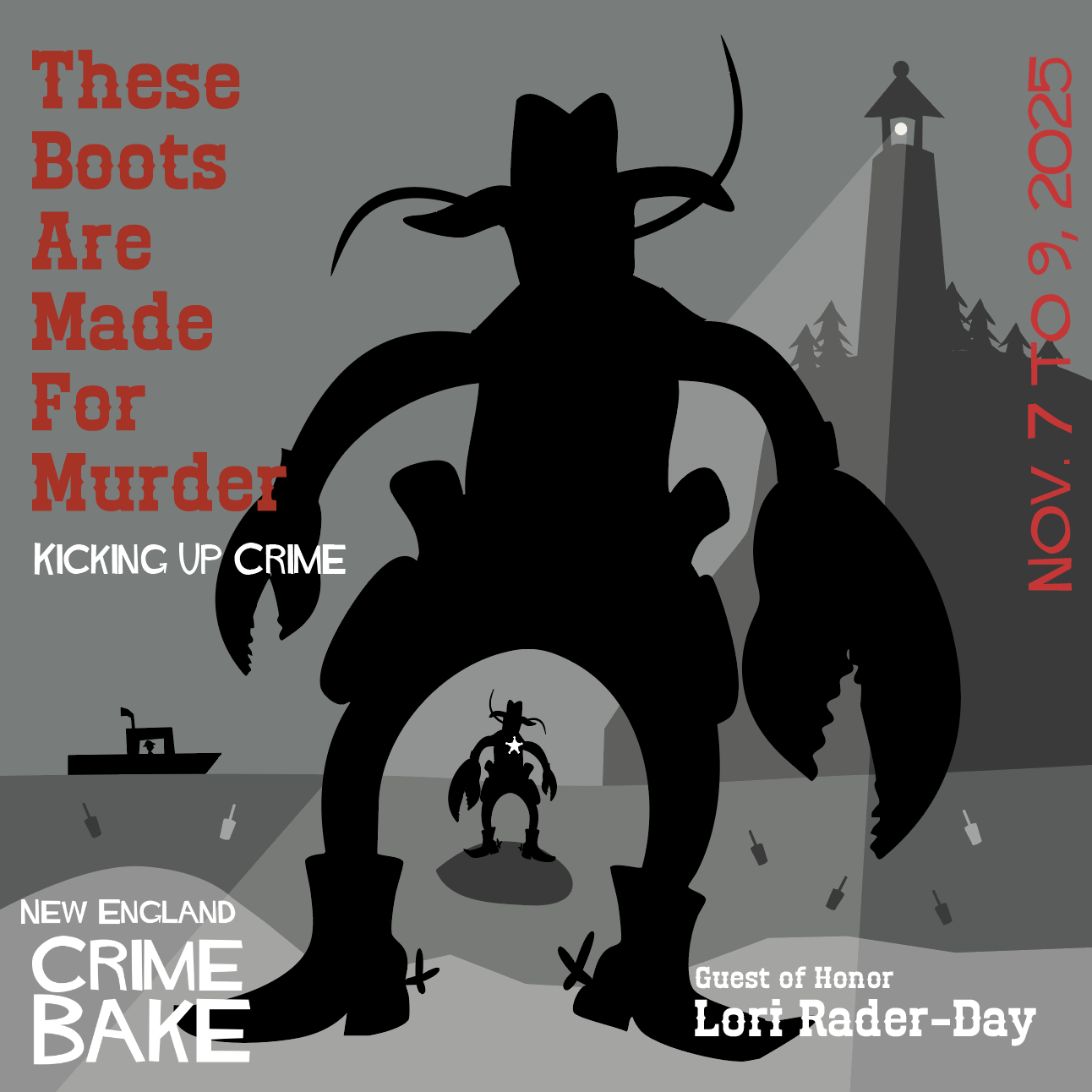
  • Crime Bake 2025

    November 10th, 2025

    I’m going back to old-school blogging for a moment to talk about Crime Bake 2025, from which I returned yesterday. I’ll say up front that I had a great time and met quite a few people I didn’t know or had only known on the periphery of the New England crime writing community. I’ll also add the disclaimer that I am on the Crime Bake committee, so I’m going to be a little bit biased.

    The Guest of Honor this year with Lori Rader-Day, and she was fabulous. Like Gabino Iglesias the year before, she was friendly, affable, approachable, down-to-earth, and honored to be there. I actually got the chance to speak to her one-on-one for a bit at the banquet, and she was lovely.

    Being on the committee, I didn’t get the chance to attend maybe all of the panels I would have liked to. Especially since I was moderating one of them.

    I was asked to moderate the Civic Duty: Writing About Social Issues panel. It can be a heavy topic, and certainly there were some heavy moments when the panelists were answering. But we had a terrific group of panelists (Richie Narvaez, Jeff Markowitz, and Courtney Denelle), and they were open and honest about their experiences and how they approach the craft of writing when it comes to folding social issues into their fiction. We heard some really great things from those who attended (to which I felt extremely relieved–this was my first time moderating a panel!).

    The banquet was later that night, and aside from a few hiccups, it went smoothly. And then attendance remained pretty high for the Sunday morning non-fiction authors/experts, which is saying quite a lot considering there are plains and trains to catch.

    A few personal highlights for me:

    • I finally got the chance to meet Sara, my editor for The Last Line in person. It was so lovey to meet her and catch up on the last year.
    • Back in March I helped run a writing retreat in Orange, MA. It involved providing some prompts and some writing time. Basically, I would show several images of places and characters and give the group fifteen minutes to write. Then I would pause them, show them images of various “things”, and give them another fifteen minutes, the idea being they must now fold the “thing” into whatever they were writing. One of the participants attended Crime Bake for the first time this year and told me that she continued what she had started using my prompts, and that it was the first time she finished writing a full-length novel. That made me warm and fuzzy.

    The number of first time attendees this year was significant, which was a great improvement over last year. And the best story of attendance we heard was about an online writing group that is spread over at least two continents. They had wanted to meet in person, and they chose Crime Bake to do it! One came from as far away as Oregon and another from London, England.

    We heard a number of times that this was the best Crime Bake in a number of years, and I’m very proud to have been able to be a part of planning it. Kick-off for planning 2026 is in December, and I’m already thinking through ideas for programming and the banquet.

  • Four Years and Counting…

    April 6th, 2024

    Seemingly out of nowhere, it hit me a few weeks ago: I’ve been home for four years. In the middle of March, 2020, my job sent us all home with the expectation we’d only be working from home for a few weeks, maybe a few months. And while we’re able now to return to the office without fear of infection, most of us, including myself, were given the option to continue to work from home. Which I have.

    I wanted to do a post about that, but I couldn’t figure out how to write it. How do you celebrate such a milestone when what kicked it all off was fear and doubt and worry about what the future would look like? Do I write about what a disaster it was for, well, everyone? The toll it took on us all, especially our kids? Or do I write about the good things that came out of it? The technology that let so many of us work from home and not be completely cut off from society? How, in some ways, some of our relationships grew closer than they would have if we hadn’t been forced to it?

    COVID was a mess. There’s no doubt about that. It disrupted lives, upended how we live, how we shop, how we think about everything from vaccines to masks to handwashing, and so much more. It came with a terrible human toll, both in lives lost and in our mental health. I hated hated hated it, and hope we never have to go through something like it every again.

    And yet, there are a few things that I will always remember as the good in the middle of the terrible, the eye in the center of the hurricane. Our small friend-pod of five that met every Friday night, outside, on the patio, distanced, yet together. Family TV every night after diner, where we would all sit around and watch a few episodes of some series we were working our way through, making a point of eating dessert while we watched. At two episodes per night, we watched (or rewatched, for some of us) all of Psych, Schitt’s Creek, and Brooklyn Nine-Nine. Running a T-shirt contest on Facebook as a way of connecting with a large group of people and coming up with new ways to reveal the winner. Adding our beagle, Hank, to the family (though, to be fair, our other dog, Harper, may not have seen this as such a good thing…).

    Looking back on four years ago, at the beginning of the unknown, I can still feel an almost visceral degree of dread. There was such a high degree of the uncertainty. Four years later, like an audience member watching a historical docudrama unfold on the History Channel, we know how it ends. But four years ago, we had no idea. No idea when a vaccine would be available. No idea if we would ever have face-to-face interactions again. No idea if we would ever get to stop using Clorox wipes on all of our groceries. The tingling feeling I get in the tips of my fingers brings that fear of the unknown back quick and sharp.

    To a degree I guess I don’t know what I’m trying to say, other than the fact that I’m grateful. I think back on those early days, and I’m grateful that we in this house made it through, grateful that, push comes to shove, I know we can survive it again if we have to.

    (But let’s try to avoid another pandemic, okay?)

  • THE LAST LINE GoodReads Giveaway!

    February 20th, 2024

    I’m very excited to announce Crooked Lane Books is running a GoodReads Giveaway for THE LAST LINE.

    The Giveaway runs until February 25, and it will be for 5 physical copies, US only.

    The winners will get an ARC (advance reader copy) mailed directly to them once the contest ends.

    So enter now at this link and you may get your hands on a physical copy of the book!

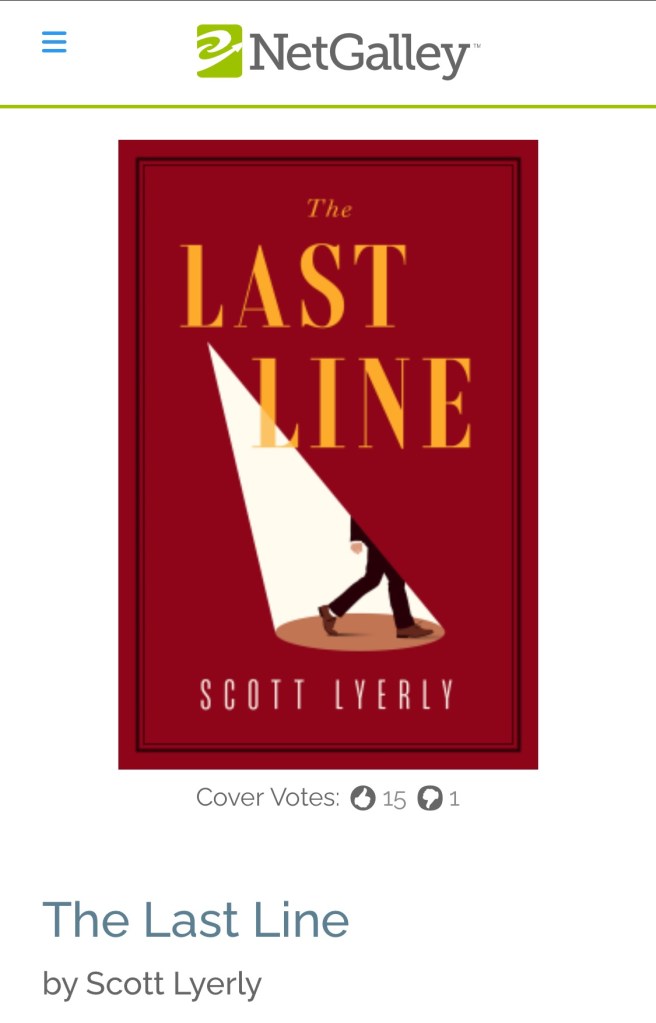
  • THE LAST LINE is on NetGalley

    February 4th, 2024

    How would you like to read my book before July? I’m excited to announce the THE LAST LINE is now available on NetGalley!

    What is NetGalley? So glad you asked.

    NetGalley is online service where, if you are a member, you can select a certain number of titles per month to read…and review!Publishers make digital review copies and audiobooks available for the NetGalley community to read and review.

    So, if you want to help me spread the word about my forthcoming book THE LAST LINE and you are a member of NetGalley, please consider giving my book a read and review!

    Here’s the link: https://www.netgalley.com/catalog/book/313305

  • B&N Preorder Sale!

    January 24th, 2024

    Barnes & Noble news! B&N is running a pre-order sale today Jan 24 through Jan 26. Rewards members and Premium Members, can save 25% on my forthcoming book THE LAST LINE. Premium members can save an additional 10%! I mean, that’s 35% off.

    So, how to order? Follow this link to my book and enter PREORDER25 in the coupon code: https://shorturl.at/fquAN

  • Moving Right Along: First Pass Pages

    January 18th, 2024

    Continuing to share my publication journey with you, I can tell you that the “first pass page” edits are done.

    What are “first pass page” edits?

    First pass pages are the first time you get your book back from the publisher typeset in what will be the published format. I received mine as a PDF, which I printed out. Then I popped open the dreaded red pen. . .

    The goal as an author is to go through the book once more and note any last changes you want or need to make. It’s really the last chance you have to edit the book to where you want it.

    Of course, that means reading it again from stem to stern, and there’s always the danger that you don’t read carefully enough because you’re just sick of it at this point, or because you’ve read it so many times you just don’t see the issues anymore.

    But, if you want the best book you can possibly write, this is it. This is the final opportunity to make editorial corrections.

    My final read-through ended up being about eleven pages of notes. Not terrible, all things being equal. Still, it felt like a lot and there’s a natural tendency to worry that you’re just annoying your publisher by passing back all the corrections you think should be made. But they want a successful book as much as you do. So it’s well worth the time to read closely and make changes. Because what comes next is pretty much the book you’ll eventually see on the shelves.

1 2 3 … 42
Next Page→

Create a website or blog at WordPress.com

Loading Comments...

    • Subscribe Subscribed
      • Scott Lyerly
      • Join 200 other subscribers
      • Already have a WordPress.com account? Log in now.
      • Scott Lyerly
      • Subscribe Subscribed
      • Sign up
      • Log in
      • Report this content
      • View site in Reader
      • Manage subscriptions
      • Collapse this bar