“As God as my witness, I thought turkeys could fly.”
Happy Thanksgiving, everybody.
“As God as my witness, I thought turkeys could fly.”
Happy Thanksgiving, everybody.
 November is, apparently, Men’s Health Awareness Month. Okay, that’s actually not a thing. What is a thing is two separate, independent movements to try and bring awareness to men’s health issues. One is called Movember, the other is No-Shave November. Each of them are an attempt to bring a great attention to men’s health issues.
Movember is a broad movement that highlights men’s issues of all kinds issues, from cancer to mental health to couch potato-ism. It started in 2003 in Australia by a couple of friends as an effort to bring back the mustache, a style trend they felt was disappearing among men. Given the success of using the mustaches as a conversation starter, they decided to step it up a notch, and in 2004, they established it as a fundraising vehicle for prostate cancer research. Since then it was gone on to become an enormous success, raising awareness for a broad range of issues. Since starting up in 2003, they’ve raised $649 million worldwide.
 No-Shave November highlights cancer specifically. It is a family-run charity organization that really came together as a formal movement about six years ago. It was started as a way to highlight cancer awareness, given the patriarch of the family passed away from colon cancer. It, like Movember, is trying to raise money through donations to be passed along to organizations like the American Cancer Society. And technically speaking, it’s not just a men’s health aware movement, as women can participate too, hairy legs and all. So to call it a men’s health awareness organization is a little disingenuous, but only a little. I mean, the logo has a silhouetted picture of a guy with stylish facial hair, after all.
The thing that both of these have in common is the attempt to increase awareness by showing one of the most masculine defining features a man can have: facial hair.
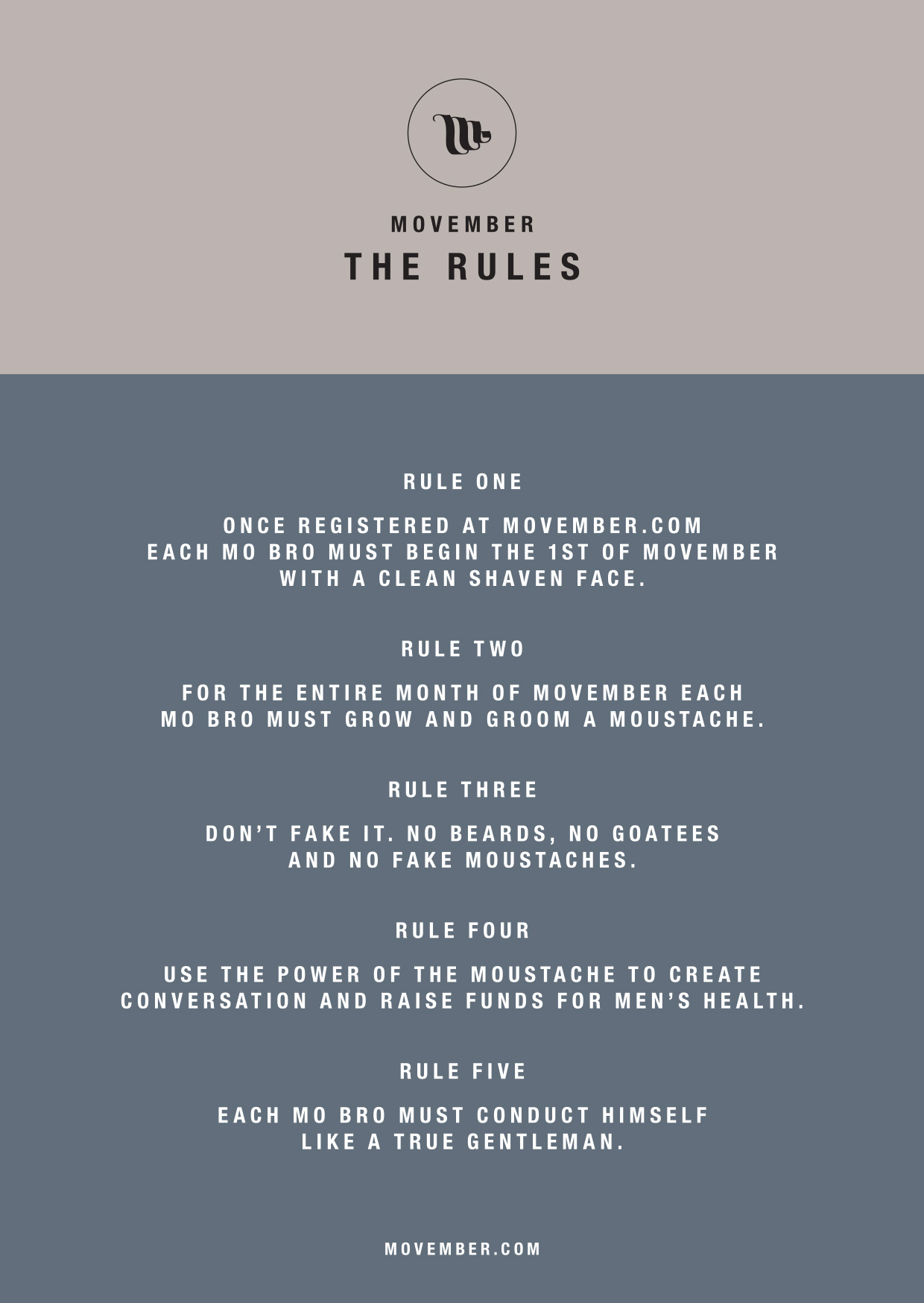 Each of these have their own rules. Movember is specific to mustaches. They encourage you to grow your mustache, starting with a cleanly shaved face on November 1st, and letting it grow until November 30th. However, you must limit your growth to your upper lip. Absolutely no beards allowed.
No-Shave November doesn’t really care whether you grow a mustache, a beard, a goatee, a fu mancho, or let your cheek whisker grow out like a Klingon. Just as long as you hang up the razor for some part of your face.
I read about these a few days ago, but only really decided to commit to the awareness yesterday. The thing is, I like shaving. I know lots of people who don’t but I’m not one of them. Shaving is such a part of my morning routine, I feel a little out of sorts whenever I don’t shave. Several months ago, I switched over from my Gillete Mach Whatever-Number-They’re-Up-To to a safety razor. The reason? Because shaving with a safety razor is bad-ass, that’s why.
Well, maybe that’s not the complete reason.
Shaving with a safety razor doesn’t allow you to just hack away at your face to get it done and move on. It requires a certain technique, along with a little patience and practice. I actually find it to be very calming and relaxing because you have to move slower and with caution.
Several months ago, I stumbled on an article on shaving on the Art of Manliness site. (For those not familiar with the Art of Manliness, I recommend you check it out.) I was trying to find a better way to deal with razor burn around my neck. The article was entitled “How To Shave Like Your Grandpa.” I couldn’t resist reading the rest. It basically explained how to shave using a safety razor, and why it’s so much better to do so. From saving money on razors (the blades cost about $1.00 each and last 1-2 weeks), to the way it helps avoid razor burn, the article was a great introduction to shaving with a safety razor.
Then I remembered that my grandfather used to have a safety razor, and that I have it somewhere in a collection of things I received after he passed away. I always wondered how it worked and the Art of Manliness article clarified that.
Like I said, shaving in the morning is a big part of my routine, and my morning feels like incomplete without it. But here’s the thing: my grandfather passed away from cancer at the age of 67. When you’re a 13 year old kid, you don’t have a sense of age. Everybody older than 18 is ancient. I’m in my forties now. My folks turn 67 next year. That’s the same age as my grandfather was when he died. Now that I’m in my forties, I have a much clear sense of time and holy moly, 67 is way too young to succumb to cancer.
So I’m growing a bread for November. I will probably shave it off when December 1st rolls around. A beard makes me look a lot older than I’d like. It’s where all the gray is hiding. I don’t mind a vacation week’s worth of stubble, but I like my smooth face. However, this year, to bring awareness to men’s health, I’m letting it grow. What I would have spent in shaving supplies for the month will go to one of these organizations (haven’t decide on which one yet).
Men: get yourselves checked out. Get your physicals if you haven’t had one this year. Mine comes up at the end of November, so it’s perfect timing for me. Get whatever cancer screenings you need for your age. If you’re feeling sad or depressed, go talk to somebody. Start flossing. (You do not, and you know it.) If your butt has sprouted roots into the couch, pry yourself up. Eat less calories if you need to. Eat more veggies (everybody needs to). Go for walks. Go for a run. Go for anything that gets the blood pumping. Make sure you’re around in a few years. For youreself and your family.
And to show that your taking all this seriously, get hairy.

I feel very fortunate because this year, my younger daughter Maggie is doing NaNoWriMo with me. There is an entire young writer’s program for NaNoWriMo that kids can sign up for. Maggie is going to do it, and so are most of the kids in her class. And that’s my fault.
During the annual open house/back to school night that school holds for the parents of students, I got to talking with Maggie’s teacher, Patty, about people who come in and volunteer and get the kids interested in something that pertains to the lesson plan. At some point in the conversation, NaNoWriMo came up. One of the Patty’s former students participated in NaNoWriMo last year. She mentioned how she would love to get some of her kids to do that again.
I didn’t say anything at the time because I felt like I wanted to think that through. Patty had no idea I had written and self publish book (insert shameless marketing plug here) or that I had done NaNoWriMo last year. I sat on it for a bit, wondering if I wanted to mention this and offer to help lead the class in a NaNoWriMo charge. I’m not a teacher and have no training in classroom management skills. I didn’t know if I’d be a good fit to come in.
In a phone conversation I was having with Patty one night about something else, I decided to mention it, and offered to come into the class and talk about what the NaNoWriMo challenge is, and see if there are any kids who were interested. Her response was unbelievably enthusiastic, and so, last week I found myself in Maggie’s classroom talking to her classmates all about NaNoWriMo, writing, and storytelling.
I have to tell you, it was a metric ton of fun. The class is great, excited about the project, and from what Patty tells me, chockablock full of writers.
I talked about what NaNoWriMo is, and what a novel is. I talked about the kinds of ways you could write a novel, from typing right into a computer to writing it all long hand. I had one person ask if the novel could be dictated to someone, or into a into a software program. Hey, if it was good enough for Paradise Lost, it’s good enough for NaNoWriMo. I talked about the process writers use to write: some write in the morning, some in the evening, some in their bedroom, some at the dining room table, some even in the kitchen. We talked about the kinds of books the kids are currently reading, and what their favorite novels are. We talked about the Inner Editor, which I dubbed the “Evil Inner Editor”, who constantly whispers in your ear telling you to stop, or slow down, or do things differently. One of the exercises from the Young Writers Program is to draw the Inner Editor on a worksheet. Once drawn, the kids are encouraged to hide him/her away so they can’t work their evil spells. We did that in the classroom and some of the kids’ Inner Editors turned out really well.
As I said, it was a ton of fun.
Patty had already come up with the word count she is hoping the kids will hit. She’s shooting for them to complete 250 words per day, which is about one page per day. That means that the kids will end up writing a 7,500 “novel” by the time it’s finished.
I’m headed back into the classroom in the middle of November to check in with the kids and see how they’re doing. I’ll be giving them tips, most of which will be plucked from the wisdom of the NaNoWriMo community. We’ll talk about the challenges they’re having and see if we can’t find ways to working around them. Most importantly, I’ll be giving them the encouragement to keep on truckin’, and to keep ignoring the “Evil Inner Editor”!
After that, I’ll head back into the classroom sometime in December to find out how they did. There is a program NaNoWriMo has this year with FastPencil, which will help kids publish their finished work. Hopefully, at the end of the month, and maybe by the end of December, there’ll be enough kids that finish and publish that Patty will have a whole new library.
After the class was over, tweets were tweeted:
https://twitter.com/scottclyerly/status/659004810625220608
 It’s November 1st. That means it’s time to kick off NaNoWriMo. And once again, I’m participating. And new this year, so is my nine year old, Maggie!
Throughout the month I’ll post various updates on the progress for both of us. Tomorrow I’ll explain how I got Maggie, and her whole 4th grade class, involved.
But for now, it’s time to write. NaNoWriMo has begun.
Aaaannnnnddddd GO!
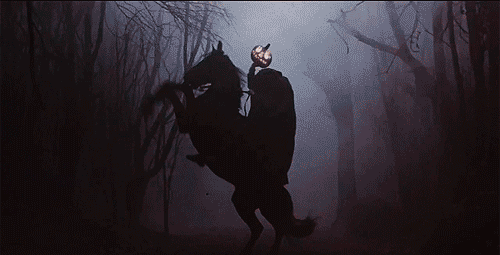
Happy Halloween everybody!
Now go door to door begging for candy.
A couple of months ago a colleague moved into a new position at work and inherited a big ugly spreadsheet. Happens to the best of us, amiright? The biggest challenge with this spreadsheet is that the previous owner, who has since retired (and good for him!) didn’t update his status notes and comments in a cell or a column. He kept them all in in-cell comments.
In. Comments.
Needless to say, the spreadsheet my colleague inherited had a couple of billion comments, some of which were absolutely enormous. She wanted to know if there was a quick way to extract all of the text out of the comments, and put them in the first available cell to the right. And if the old comments could be deleted as part of the extraction, that would be a bonus.
To which I said, of course that can be done!
And so, I wrote this little routine as a way of pulling the text from comments, placing it in the first available cell to the right, and blowing away the old comments if desired. Enjoy!
Sub ExtractComments()
'*******************************************************************************
' Description:  This iterates through all of the used cells in a worksheet
'               and where comments exist, extracts them and places them
'               in the next free cell to the right in the row where the
'               comment exists.
'
' Author:       Scott Lyerly
' Contact:      scott.c.lyerly@gmail.com
'
' Notes:        None.
'
' Arguments:    None
'
' Returns:      None
'
' Change Log:
' Name:                 Date:           Init:   Modification:
'---------------------------------------------------------------------
' ExtractComments V1    10-APR-2015     SCL     Original development
'
'*******************************************************************************
On Error GoTo ErrorHandler

' Variable declarations.
Dim sh          As Worksheet
Dim rng         As Range
Dim rCell       As Range
Dim rComments   As Range
Dim lAns        As Long
Dim lCalc       As Long

' Set some references to the active sheet and the sheet's used range.
Set sh = ActiveSheet
Set rng = sh.UsedRange

' Check to see if there are any comments in the sheet.
Set rComments = rng.SpecialCells(xlCellTypeComments)
If rComments Is Nothing Then GoTo Exit_Clean

' Ask user if they want to delete the comments as they are extracted.
lAns = MsgBox("Do you want to delete the comments as they are extracted?", vbYesNo + vbQuestion)

' Speed up the processing time.
With Application
lCalc = .Calculation
.Calculation = xlCalculationManual
.ScreenUpdating = False
End With

' Iterate through the used range and where there are comments,
' extract their text and add it to the row.
For Each rCell In rng
If Not Intersect(rCell, rComments) Is Nothing Then
sh.Cells(rCell.Row, sh.Range("XFD" & rCell.Row).End(xlToLeft).Column + 1).Value = rCell.Comment.Text
' If the user selected YES above, delete the comments.
If lAns = vbYes Then rCell.Comment.Delete
End If
Next rCell

Exit_Clean:

' Restore the environment.
With Application
.Calculation = lCalc
.ScreenUpdating = True
End With

' Delete objects to memory.
Set sh = Nothing
Set rng = Nothing
Set rComments = Nothing

Exit Sub

ErrorHandler:
MsgBox Err.Number & ": " & Err.Description
Resume Exit_Clean

End Sub
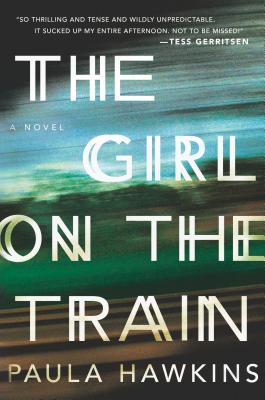 The last of the books I snarfed down at the end of this summer was “The Girl On The Train” by Paula Hawkins. This was the “it” book of the summer, the one everyone was talking about and that everyone couldn’t put down. It was supposed to be the page-turner with the twists you couldn’t see coming. And so I too engulfed this one to see what everyone was talking about.
Truthfully, if I had to sum the book up in a word, it would be “meh”.
It’s hard to give too much of a plot summary without giving too much away, and while I, unlike the rest of the world, did not think the book was all that and a bag of chips, I still don’t wish to spoil it for those you enjoy these things more than I do. Or as my wife would describe it, “everyone else but you.”
Fair enough.
The essence of the plot, then, is that a woman named Rachel, down on her luck and sipping gin and tonics from a can while taking the train back and forth to London, fantasizes about what the people in the houses behind the tracks do, the kind of lives they lead. Her own life has fallen apart and she takes a kind of solace in the lives these fantasy people lead in her head. She has even given them names, since their real names are unknown to her.
Then, one day, she sees something as she’s staring through the train window, something that turns her fantasy on its head. At that moment, her life changes from fantasies about these people to an all out obsession about what she saw. An obsession so deep, she risks her life and livelihood, and perhaps darkest of all, her integrity to get close enough to discover the truth.
It sounds like an enthralling premise, doesn’t it? Critics have been using the term Hitchcockian to describe it. It does have a certain “Rear Window” quality to it, that strange voyeuristic quality of Jeff Jefferies looking out his back window and seeing something he thinks is a murder. But that’s were the comparison ends. It starts with a voyeur and turns into a study of a life in freefall. In that regard, the book actually became hard to read. As the main character made bad, then worse, then catastrophic decisions, I wondered how much longer I could read until the unraveling of her life became too unpalatable. It never quite got there, but it came really darn close.
The plot relies largely on what the New York Times referred to as “unreliable narration”, meaning you can’t trust what the narrator is telling you. Except that you can. The narration flickers between three narrators, all of the women, all of whom are involved in the plot. Each one has their quirks and problems, each has moments of fooling themselves, but that’s really all they’re fooling. Unreliable narration only goes so far, and when at least one of the characters is a blackout drunk, you can readily expect that their memory will be a bit, shall we say, fuzzy.
Another of the devices used to confuse the reader is a jumbling of the timing of the scenes. The cutting is designed to bring the reader back and forth and possibly add some confusion, but a careful reading will show that each chapter is timestamped. You get a certain anticipatory feeling as you near the time when you know that the precipitating event happened, and that you’ll finally get to see it, feeling like maybe you’ll be surprised by what’s around the corner. But you aren’t.
Or at least I wasn’t.
Also, the book was written in the first person present tense. Don’t get me started.
The climax doesn’t twist nearly as much as everyone had been claiming it did. I found myself unsurprised at the ending, indeed, hoping for something different. I was disappointed when I was right. Of the four books I’ve reviewed in the last few days, having gulped them all down like a thirsty man in a desert, I’d have to say that “The Girl On The Train” was my least favorite.
Sorry everybody.
Queue up the backlash.
 I needed something to cleanse the mental pallet after Lou Berney’s “The Long and Faraway Gone.” It was such an intense read, the way Berney knifes the reader in nearly every single scene, that I needed to visit some familiar friends. Queue up Spenser.
Since Robert Parker’s sudden death in 2010, Ace Atkins has been carrying on the Spenser tradition with the blessing of the estate. Hand picked to keep Spenser going, Atkins has written four Spenser books thus far, and will likely keep going for the foreseeable future. The first one, called “Lullaby”, I reviewed here. It wasn’t a bad book, so I thought I’d give “Wonderland” a try.
Doesn’t hurt that I got it on remainder.
This time, the client is Henry Cimoli, the owner of the Boston gym where Spenser and Hawk used to (and still do) box. He’s being muscled out of the condo he owns so that a Las Vegas casino developer can move in and build. The novel explorers Henry more than I remember Parker ever doing, and Atkins mostly nails him. There is of course the usual cavalcade of characters that Atkins likes to bring to the stage, and to a certain extent, this feels like Atkins is trying to prove to the Parker faithful that he knows the Spenser work so well. Despite the fact that the book is chock full of characters Spenser has had contact with in the past, the characterizations largely work to the novels advantage.
There is one exception. The relatively new player in the on-going adventures of Spenser is one Zebulon Sixkill, the American Indian that Spenser has taken under his wing to train as a private investigator. This relationship feels forced, as if Atkins picked up a leftover character from the Spenser dinner table and decided to do something with him. In the final Spenser book by Parker, “Sixkill“, we’re introduced to “Z”, as Zebulon has come to be called, but there is nothing to indicate that he’ll be a continued or recurring character. I’m not sure if this is Atkins taking liberties, or whether any of Parker’s notes indicate that Z will continue, but in this case, it feels forced.
As a crime novel, it’s a good one. The plot is more complex than the ones Parker used to set up, at least in the later Spenser novels. Spenser’s sarcasm is present, though more muted than it was in “Lullaby”, which isn’t a bad thing. “Lullaby” felt a little over the top with the hard-boiled quips. Spenser is still sarcastic in “Wonderland”, but he never ventures down the path of snarky. The prose is not as lean as Parker’s was, but then again, few hard-boiled novels written these days are as lean as Parker wrote. Parker, self-admittedly, loved dialogue because it “chew[ed] up a lot of pages.” One could look at this as being lazy, but I find that Parker’s style was such that the plot, characters, and danger were all conveyed convincingly through dialogue, and sometimes dialogue alone. A great example of how this works is through the Jesse Stone novels (which I highly, highly recommend).
After the last page is done, Atkins still isn’t Parker. They’re tough shoes to fill. But Atkins does a nice job with most of the characters and the location of Boston itself. Spenser will continue to live on, and in Atkins hands, that’s not a bad thing.
 Rarely do I make a point of going to see a movie on opening night. There are few that I want to plan my schedule around. But after reading Andy Weir’s relentlessly readable debut “The Martian“, and after seeing the commercials and trailers for the movie version for the last few months, I knew I’d have to crave a slot in my calendar to fit it in.
And I’m so glad I did. Holy cow, what a movie.
For the uninitiated, the premise of the book and movie is that, in a near future when mankind has made successful exploratory missions to Mars, one mission goes wrong. A powerful storm descends upon the mission and they are forced to abort the remainder of the mission. But in the effort to get to the evacuation ship, one crew member, Mark Watney, is struck by debris from a collapsing communication array and lost to a gust of Mars-strength wind. With his bio-monitor returning nothing, the remaining crew members blast off from the red planet, leaving the body of their fallen comrade behind.
Except that Mark’s not quite dead yet. And having been presumed dead and left behind, he’s now stranded on a planet that does not support human life. This then is the crux of the story: how to survive on a uninhabitable planet for the three years it would take for NASA to mount a rescue mission? That is, presuming he can figure out how to contact them in the first place.
The book was one hot read that I opened on a Friday over Christmas and didn’t put down until I finished it that Sunday. Given that I essentially unhinged my literary jaw and swallowed the book like a python, I couldn’t wait to see the movie.
Is it a fully faithful adaption of the book? Of course not. What movie is? The book is one life threatening sequence of events after another. As Scott Kelly once said, “Space is hard.” In the interest of time, there was simply no way to put every single struggle that Mark Watney, the titular Martian, has to overcome. The movie would be four plus hours. As it stands, the movie clocks in and two hours and twenty-one minutes, not a short stretch by any means.
The key for director Ridley Scott, then, is to focus on those things that are the most dramatic. And there are several. Anyone who has read the book will tell you that the challenges range from the of farming potatoes in Martian soil to deliberating starting fires inside the habitat (or “HAB”), from rovers with short battery life to the lack of water, from the lack of food to the unbelievable dust storms–the list goes on and on. These, and a few others, are more than enough to fill one film.
Scott does a remarkable job with the material, making sure we are in close with Matt Damon’s Mark Watney so that we can feel Watney’s plight, and then offering huge sweeping visuals to remind us of just how alone Watney is. He keeps the pressure on, allowing victories over overwhelming odds before throwing another problem at Watney. In some ways, the approach reminded me of how James Cameron treats his characters, throwing as much as he can at them to see what they’re capable of. The narrative toggles back and forth between Watney’s attempt to survive in the red wasteland and the key players at NASA who are trying to figure out how to get him home, struggling with their own boundaries, knowing that they must push past them if they are to save Watney.
Matt Damon is the perfect choice for Watney, conveying as he does so well the likability of the character, letting us feel his fear when things go bad, feel his excitement when he solves another life-threatening problem, and feel his tense sense of near-relief when he’s on the verge of being rescued. He keeps his spirits up by focusing on each task at hand and by making occasional light of the situation. There’s a gentle sarcasm to the character that never veers into snarky or nasty, but is always just on the precipice of defeated, without falling into that crater. Damon has always done a marvelous job of allowing the audience into his characters, eliciting empathy from the viewers, whether he’s trapped on Mars, hunted by the CIA, or being rescued by Tom Hanks.
The other standout for me was Jeff Daniels as NASA Director Teddy Sanders. If you boil the NASA Director’s job down to brass tacks, Teddy Sanders is a paper-pusher, the highest paid account in the building, with whom the buck stops. Each decision regarding the rescue mission goes through him and the weight of each decision is evident on his face. He keeps up the steely-eyed resolve even as some of decisions are not the popular ones. But someone has to be in charge, and Sanders is that man.
There are many great performances, including Chiwetel Ejiofor, Donald Glover, Jessica Chastain, and Benedict Wong. Even actors who are given very little to do, such as Kristen Wiig and Sean Bean, stand out, making the most of the material at hand. (There is a “Lord of the Rings” joke in there that had me on the floor.)
You could boil this movie down to the simple catch-phrase of “Apollo 13 on Mars”, but that does it a disservice. Is it as good as “Apollo 13“, to which it will likely be compared? Probably not. “Apollo 13” is one of the finest films of the thirty years. But Ridley Scott and crew know how to deliver tense, riveting entertainment, and I was on the edge of my seat even though I knew how the film would end. It’s helluva good film and one of the best you’ll see all year.

